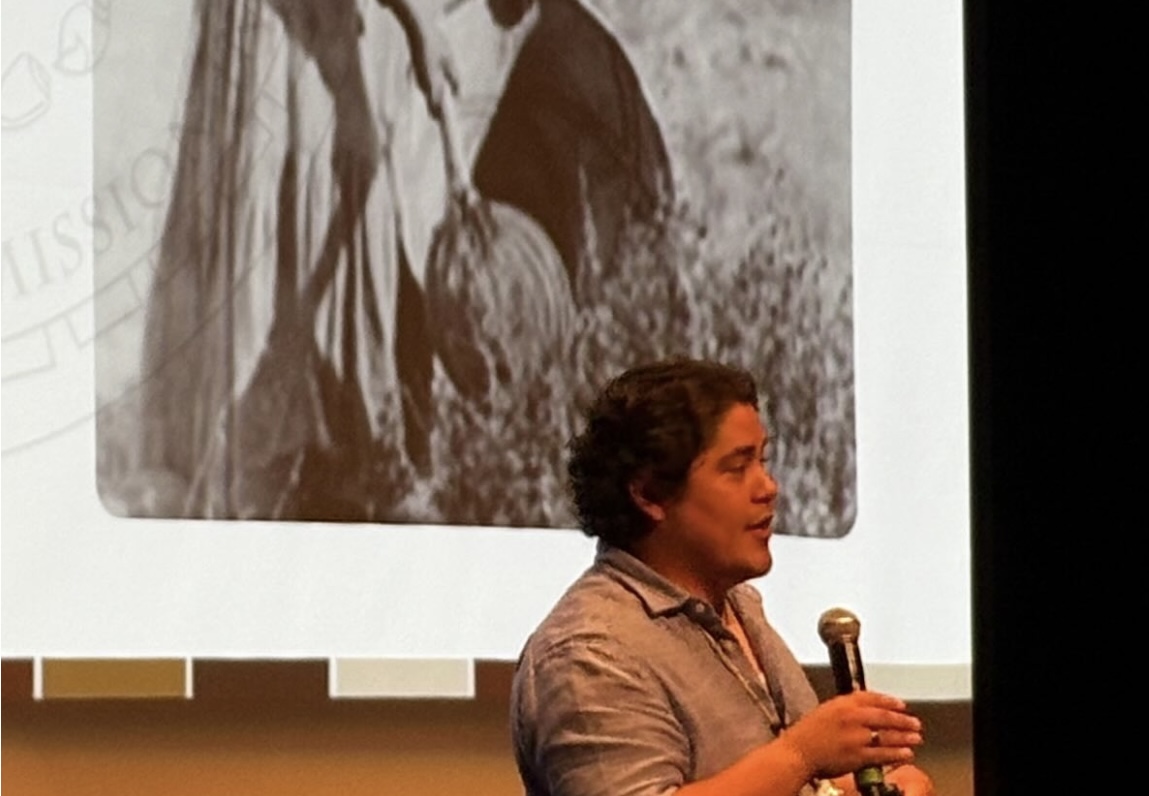
A conversation with Samuel Lopez, English alumnus
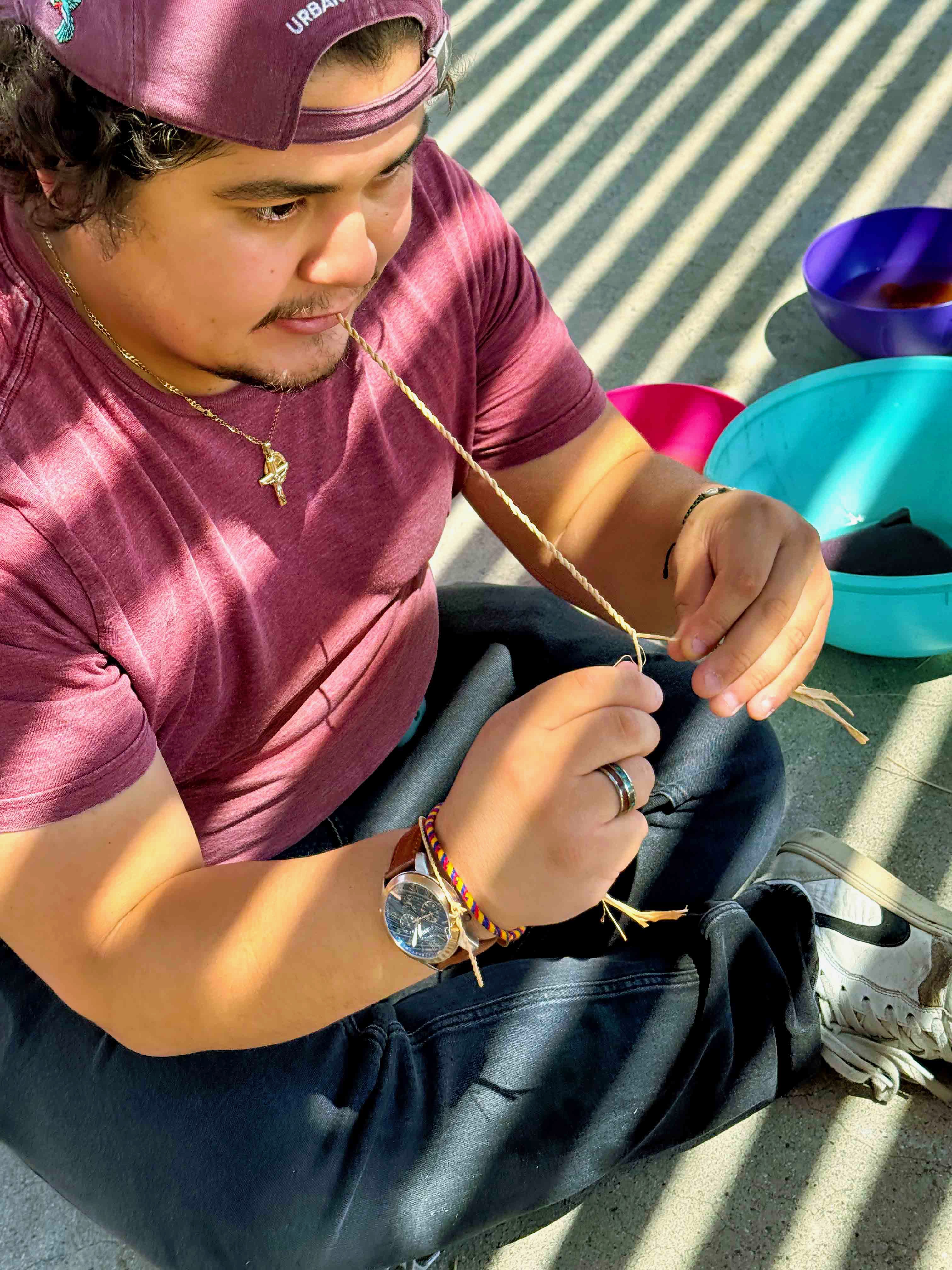
Samuel Lopez was a student leader at The Catholic University of America, where he served as Intercultural Student Coordinator for the Center of Cultural Engagement. He served two years as President of the Student Organization of Latinos (SOL) and as Dance Lead for SOL’s Pasión dance team.
Deeply involved in the arts, he worked for three years as a Production Office Assistant and Scene Shop Worker for the Rome School of Music, Drama, and Art. He was also a member of Take Note and CUA FOCUS, blending performance with community engagement.
Academically, he earned Dean’s List honors multiple times and served for two years as a Writing Center Tutor. His additional involvement included membership in the English Society, serving as Social Media Manager for the Undergraduate Research Journal Inventio, participating in a mission trip to Jamaica, contributing to the Freshman Retreat Team (2017), competing as a Mr. CUA contestant (2017), and studying abroad in Rome during the spring semester of his junior year.
What is your current job/title?
Development Director for the Gabrieleno/Tongva San Gabriel Band of Mission Indians and a Freelance Audio/Visual Technician for Live Entertainment/Production
Why did you choose to study English at Catholic U.?
It may sound like the standard answer you’d expect from an English major, but the truth is simple: I chose English because I love reading. I’m drawn to stories that invite you to dig deeper and sometimes even pursue research beyond the page. I’ve always loved thoughtful discussion and the kind of deliberation that literature makes possible.
I chose Catholic specifically because I wanted an experience that was grounded in my values while also stretching me beyond what was familiar. Coming from Southern California, I was ready for something different. Being in Washington, D.C. offered exposure to cultures, perspectives, and opportunities I wouldn’t have encountered back home. At the same time, Catholic provided a foundation that aligned with who I was and what I believed.
What was your path from gradation to your current job like? What advice can you give senior majors and recent grads about life after graduation?
To be honest, my path has been anything but linear. I originally set out to become a writer for television and film. After graduation, I took some time to breathe and exist outside of school before stepping into the workforce. Then the post-pandemic reality hit, and I took whatever work I could find. I worked as a UPS driver helper, a warehouse associate for Guitar Center, and later as a Production Assistant for a large event rental company.
My first “career” roles were in Admissions, but I quickly realized the traditional 9-to-5 structure wasn’t the right fit for me. I transitioned into freelance work as an AV technician in live entertainment production, essentially full-time. That opportunity grew out of my experience working in the Production and Drama departments at Catholic, where I helped produce various shows. Over time, I worked on everything from backyard birthday parties to award show red carpets and concerts.
While all of that was happening, I attended a tribal council meeting in my community because I wanted to reconnect with my cultural heritage. That decision unexpectedly drew me into the world of tribal politics and activism. What started as a land restoration role with a land conservancy quickly expanded into speaking engagements, grant writing, land sovereignty meetings, and professional development for educators.
As a federally unrecognized tribe, our work centers on cultural preservation, visibility, and education. Serving as Development Director has challenged me to use my skills in ways I never anticipated. For example, I never imagined I would enter the field of linguistics, yet our cultural preservation efforts have led me to pursue a doctorate in linguistics. The aim is to support language revitalization while approaching it through a community-centered lens rather than purely academic research.
If I could offer any advice, it would be this: stay open. Be willing to take jobs that don’t directly align with your degree. There are countless roles you may not even know exist; positions that draw on your unique combination of skills in ways you never imagined. And that’s okay.
I often joke that my brain doesn’t make sense, but the truth is I’ve never stopped being a student. Every experience teaches you something; whether it’s a technical skill or a soft skill. The connections you build along the way matter. No time is wasted; you just may not yet see how it will serve you later.
Trust the process. Let God be God. You never know where you’ll be led.

How has your English background served you professionally?
Studying English has made me incredibly versatile. The ability to discern nuance and truly understand language has served me in every professional space I’ve entered. Clear communication is a skill that never goes out of style. That skill set has helped me write effective emails, speak coherently and confidently in front of audiences, and teach complex concepts in ways that are accessible to different age groups. At its core, studying English trained me not just to read and write, but to think carefully about language. That foundation has been invaluable in every role I’ve taken on.
What do you like the most about your job?
I’m drawn to the dynamic nature of my work. No two days are ever the same and that suits me well. It constantly pushes me beyond my comfort zone, which has helped me grow in ways I didn’t anticipate. What gives me the greatest sense of pride, though, is the weight of the work itself. Cultural preservation can be demanding and, at times, overwhelming but it is deeply necessary. The work we do matters not only for those living today, but for the generations who will come after us. Being part of something that safeguards identity, history, and language carries a deep responsibility, and that responsibility feels meaningful.
What does a typical day at work look like for you?
My day usually begins with a good cup of coffee or tea. I never thought I’d be the person to say that, but I finally understand the reverence people have for a well-made cup. (Making a good cup of black tea really is an art form)
Once I’m in the office, the day moves quickly. It’s often filled with responding to emails, meeting with community partners, and carving out focused time to work on grant applications. We typically have four or five projects running simultaneously, so I work closely with my team to ensure each one receives the attention and care it deserves.
What did you learn as an English major at Catholic U. that has stayed with you?
I’ve learned to be deeply discerning about how something is said. In my day-to-day work, I’m constantly balancing the need to be both concise and expansive at the same time. The vocabulary and analytical skills I developed at Catholic allow me to use language intentionally, whether I’m drafting grant proposals or speaking publicly. Words matter in my field, and I’ve learned how to choose them carefully.
The simple, maybe corny answer is that I learned the value of being a strong writer. At Catholic, I was trained to communicate clearly and effectively, often within strict word limits. That skill has proven invaluable. In grant writing especially, I have to present compelling, persuasive cases to application committees without being verbose. I genuinely don’t think I would be as effective in my role without the English department pushing me to refine my thinking and sharpen my writing. It taught me not just how to write, but how to communicate with purpose.
Do you have any advice for current English majors?
If I’m being honest, my advice is to really take full advantage of the college experience. Work hard in your studies, but also invest in the soft skills you’ll need for human connection. Be open to all kinds of opportunities. Now more than ever, there isn’t a single clear path to success, and in a world that often feels disconnected, nurturing meaningful relationships is more important than ever.
Take full advantage of office hours. One of the undeniable strengths of attending Catholic is the access to professors who are experts in their fields. Being able to talk through ideas, ask questions, and gain perspective from people at the top of their disciplines was truly invaluable to me. Being able to foster relationships with professors rather than just TA’s is such an incredible opportunity so use it or lose it!
And finally, (corny answer incoming), find joy in the little things. It’s easy to get lost in the challenges, frustrations, and negativity around us, but there’s always good to be found too. Taking the time to notice it makes all the difference.